


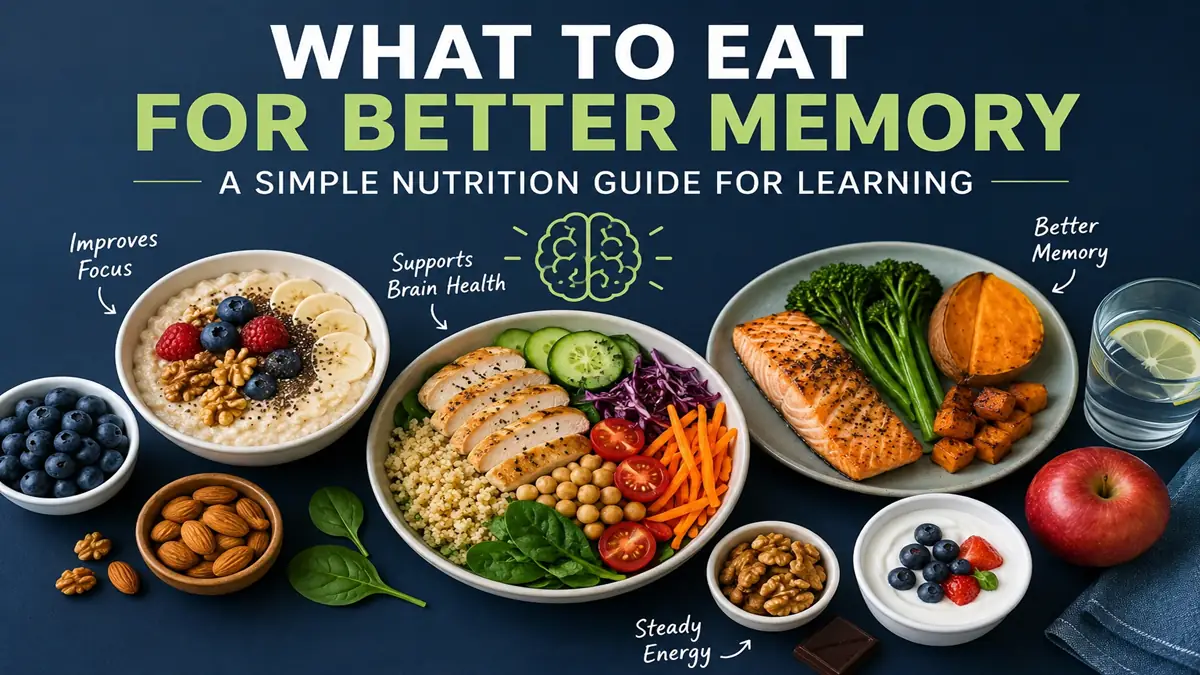
When people think about improving memory, they often jump straight to revision techniques, brain games or study schedules. Those things really do matter however your brain also needs fuel.
Food does not “give you a perfect memory”, and no single snack will make you remember everything before a test. But the way you eat can affect your energy, concentration, mood and ability to learn. A steady, balanced diet gives your brain the nutrients it needs to stay alert, build connections and recover properly after a busy day.
Research around brain health often points towards eating patterns rich in vegetables, berries, whole grains, beans, nuts, olive oil, fish and other minimally processed foods — similar to Mediterranean-style and MIND-style diets. These patterns are associated with better long-term cognitive health, although they work best as part of an overall lifestyle that includes sleep, exercise and regular mental challenge.
Why food matters for memory
Your brain uses a lot of energy. Even though it is only one part of your body, it needs a constant supply of fuel to help with attention, thinking, problem-solving and memory.
For learning, the goal is not to eat “perfectly”. The goal is to avoid big energy crashes and give your brain a mix of:
- Slow-release carbohydrates for steady energy
- Protein for neurotransmitters and feeling full
- Healthy fats for brain and heart health
- Fibre for stable digestion and energy
- Vitamins, minerals and antioxidants from colourful plant foods
Breakfast: steady energy for morning focus
A good learning breakfast should give you energy without causing a quick spike and crash.
Try:
Oats with berries, banana or apple, chia or flax seeds, walnuts or almonds, and Greek yoghurt or milk.
This works well because it combines:
- Oats for slow-release carbohydrate
- Fruit for natural sweetness and fibre
- Nuts and seeds for healthy fats
- Yoghurt or milk for protein
- Berries for plant compounds linked with brain health
Whole grains are a useful choice because they contain fibre and a wider package of nutrients than refined grains.
Simple breakfast ideas
- Porridge with blueberries, banana and walnuts
- Greek yoghurt with oats, berries and chia seeds
- Wholegrain toast with eggs and fruit
- Overnight oats with apple, cinnamon and flaxseed
Try to avoid: relying only on sugary cereal, pastries or energy drinks. These may give a quick lift, but they can leave you hungry and distracted later.
Lunch: support neurotransmitters and afternoon energy
Lunch is where many people either under-eat or choose something that makes them sleepy. A memory-friendly lunch should include protein, slow carbs, vegetables and healthy fats.
Try:
Eggs, chicken, tuna, sardines, tofu or beans with wholegrain rice, bread or potatoes, leafy greens, colourful vegetables and olive oil.
Protein foods such as eggs, fish, beans, tofu and chicken provide amino acids, which the body uses for many functions, including making chemical messengers involved in brain activity. Wholegrain carbohydrates help maintain energy, while vegetables add fibre, vitamins and plant compounds.
Simple lunch ideas
- Egg and avocado wholegrain sandwich with salad
- Tuna, brown rice and vegetable bowl
- Chicken, quinoa, spinach and olive oil dressing
- Lentil soup with wholegrain bread
- Tofu stir-fry with rice and colourful vegetables
Student tip: if you get tired after lunch, check the balance. A very heavy, low-fibre or mostly refined-carb meal can make studying feel harder. A lighter balanced lunch often works better.
Dinner: refuel without feeling too heavy before sleep
Dinner should help you recover from the day and prepare for good sleep. Sleep is essential for memory because it helps the brain consolidate what you have learned.
Try:
Lentils, beans, chickpeas, mackerel, sardines, chicken or tofu with vegetables and slow carbs such as sweet potato, brown rice or quinoa.
Oily fish such as mackerel and sardines are especially useful because they contain long-chain omega-3 fats.
Simple dinner ideas
- Mackerel with sweet potato and greens
- Chickpea curry with brown rice
- Chicken, roasted vegetables and quinoa
- Lentil bolognese with wholegrain pasta
- Tofu, vegetables and noodles or rice
Try to avoid: eating a very large, greasy meal right before bed. It may make sleep less comfortable, and poor sleep can make memory and focus worse the next day.
Optional snacks: useful before study
Snacks are not essential, but they can help if your energy dips between meals. The best study snacks combine carbohydrate, fibre, protein or healthy fats.
Try:
- Fruit with nuts
- Yoghurt with berries
- Hummus with oatcakes
- Apple slices with peanut butter
- Dark chocolate with nuts
- Wholegrain toast with egg
- A smoothie with milk or yoghurt, banana and berries
Dark chocolate can fit in as a small snack, especially when paired with nuts, but it is still best treated as an extra rather than the main part of the diet.
Best foods to include for memory and learning
Here is a simple “brain-friendly” food list:
| Food group | Examples | Why it helps |
|---|---|---|
| Whole grains | Oats, brown rice, wholegrain bread, quinoa | Steady energy and fibre |
| Berries | Blueberries, strawberries, raspberries | Plant compounds and antioxidants |
| Nuts and seeds | Walnuts, almonds, chia, flax | Healthy fats, fibre and minerals |
| Oily fish | Sardines, mackerel, salmon, trout | Long-chain omega-3 fats |
| Eggs | Boiled, scrambled, omelette | Protein and choline |
| Beans and lentils | Chickpeas, black beans, lentils | Protein, fibre and slow carbs |
| Leafy greens | Spinach, kale, rocket, broccoli | Folate, fibre and plant nutrients |
| Olive oil | Extra virgin olive oil | Healthy unsaturated fats |
| Yoghurt or milk | Greek yoghurt, milk, fortified alternatives | Protein and calcium |
A simple day of eating for better memory
Here is an easy example:
Breakfast
Porridge with berries, banana, chia seeds, walnuts and Greek yoghurt.
Lunch
Chicken, egg, tuna or tofu bowl with brown rice, spinach, peppers, cucumber and olive oil dressing.
Snack
Apple with almonds, or yoghurt with berries.
Dinner
Lentil curry, sardines, mackerel, chicken or tofu with vegetables and sweet potato, brown rice or quinoa.
Drink
Water across the day. Tea or coffee can be useful for alertness, but too much caffeine late in the day may affect sleep.
What to limit when studying
You do not need to cut out every treat. But for better focus, it helps to limit foods that cause energy swings or leave you feeling sluggish.
Try not to rely on:
- Sugary drinks
- Energy drinks
- Sweets as a main study snack
- Large portions of fried food before studying
- Skipping meals and then overeating later
- Too much caffeine late in the afternoon or evening
The aim is consistency, not perfection.
Final takeaway
Better memory is not built from one “superfood”. It comes from repeated habits.
For learning, the best approach is simple: eat regular balanced meals with slow carbohydrates, protein, healthy fats, colourful plants and enough fluids. Combine that with sleep, movement and good study techniques, and your brain has a much better chance of performing well.
A useful rule is:
Build each meal around one slow carb, one protein source, one healthy fat and one or two colourful plant foods.
That is a simple way to eat for steadier energy, better focus and stronger learning.