
How Memory Works
Explore how the brain encodes, stores, and retrieves information. Learn about different types of memory, why forgetting happens, and the factors that can affect recall.
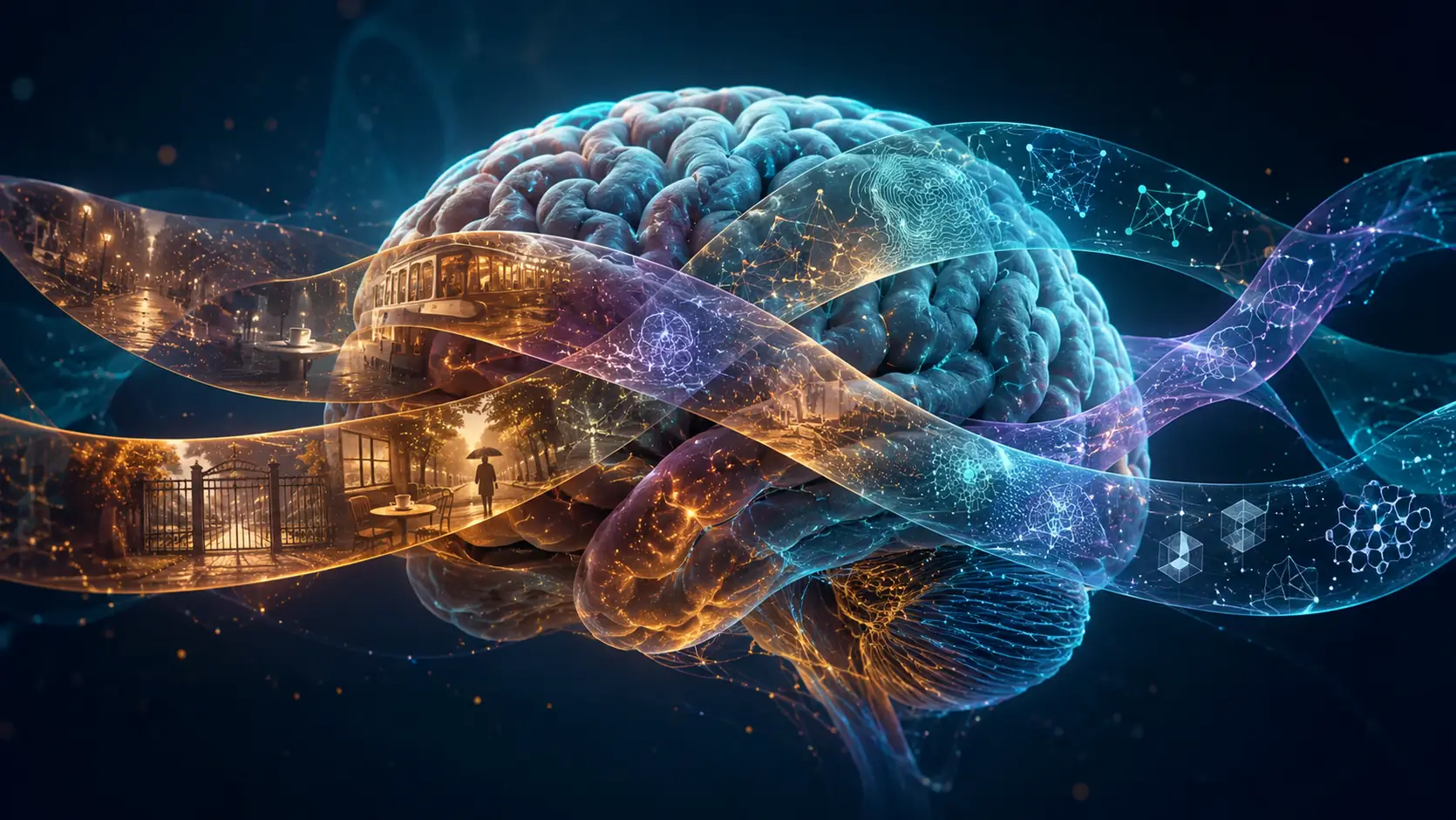
Episodic vs Semantic Memory: Key Differences
Episodic memory recalls personal events; semantic memory stores facts and meanings. Learn how they differ, interact and depend on the brain.

What Is Long-Term Memory? Explicit vs Implicit
Long-term memory retains experiences, knowledge and skills over time. Learn how explicit and implicit memory work, with examples of each.
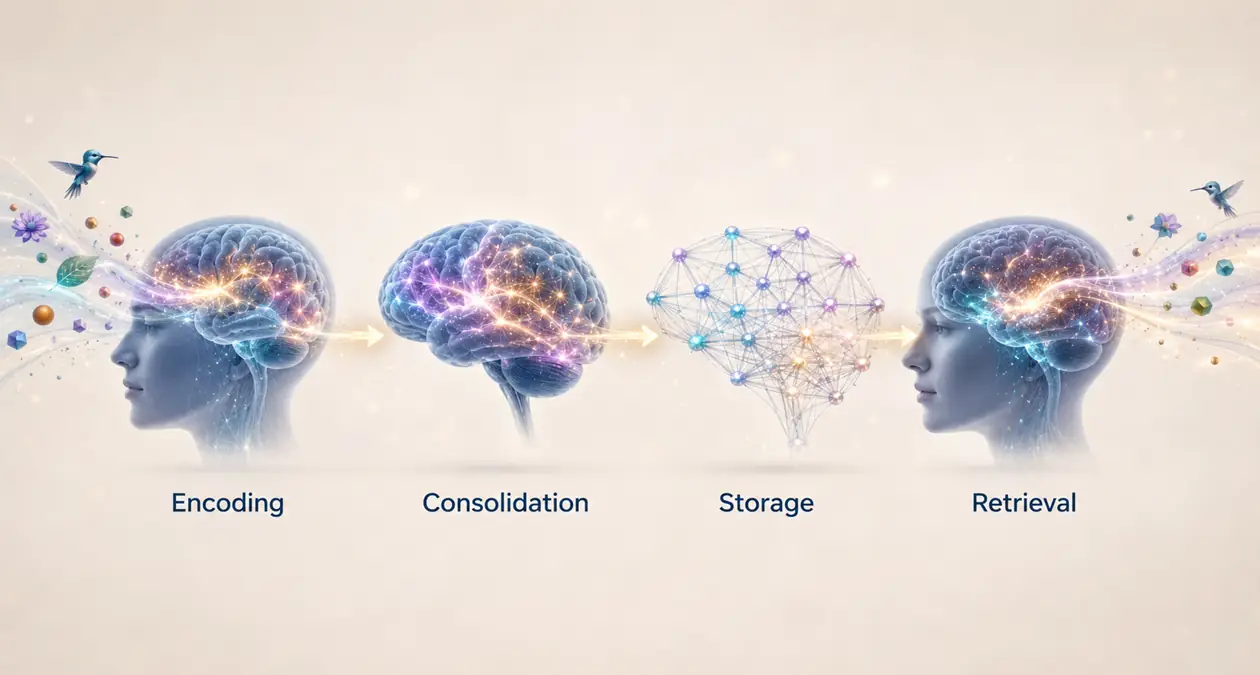
How Are Memories Formed? Encoding, Consolidation, Storage and Retrieval
Memories form through encoding, consolidation, storage and retrieval. Learn how the brain turns experiences into memories and recalls them later.
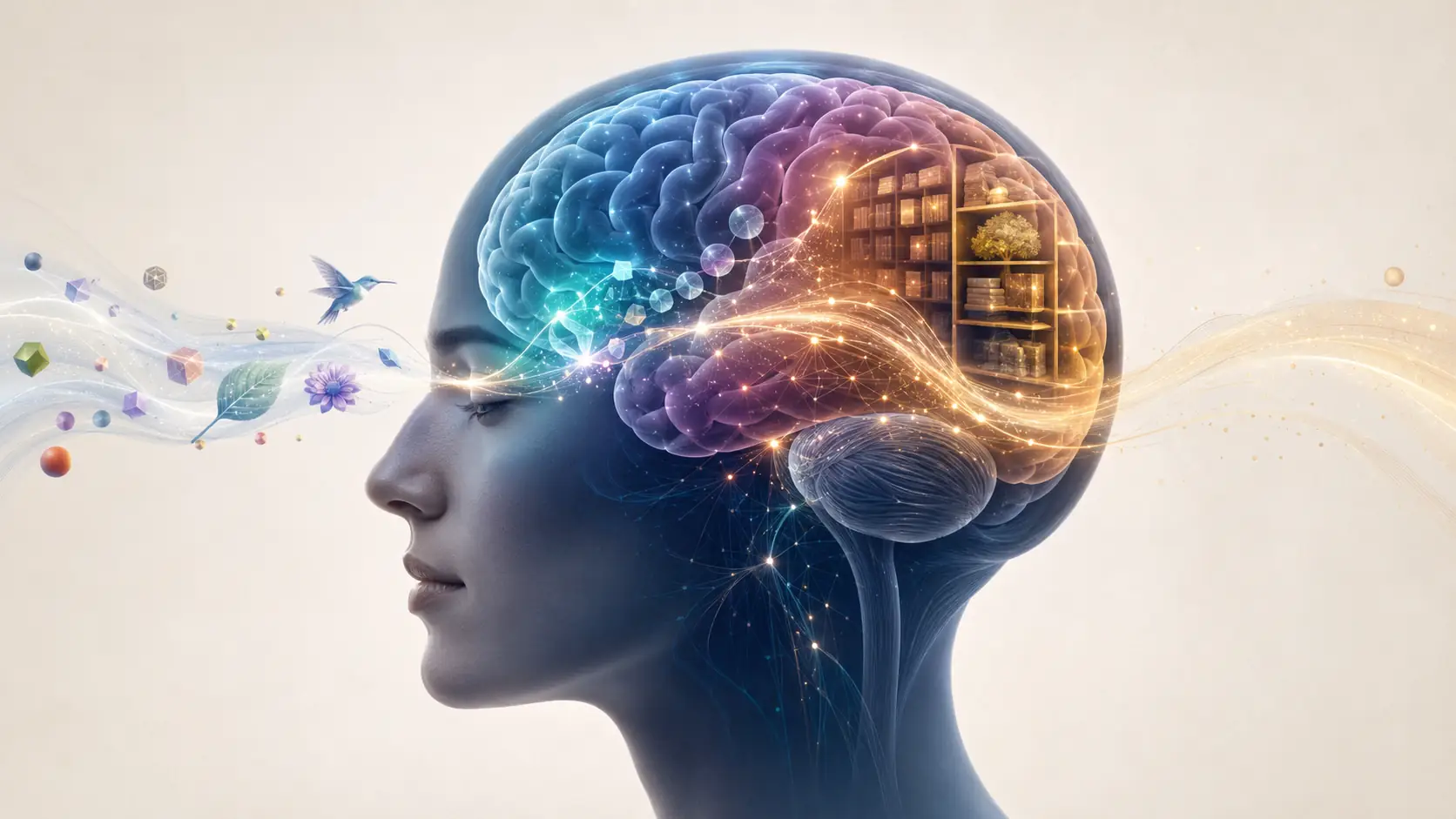
Types of Memory: The Main Types Explained With Examples
The main types of memory are sensory, short-term, working and long-term memory. This guide explains how each works with clear, everyday examples.

Working Memory vs Short-Term Memory: What’s the Difference?
Working memory and short-term memory are closely related, but they are not the same. Learn the difference with simple examples and practical tips.

What Is Working Memory? A Simple Guide With Examples
Working memory helps you hold and use information in the moment. Learn what working memory is, how it works, real-life examples, and how to support it.