


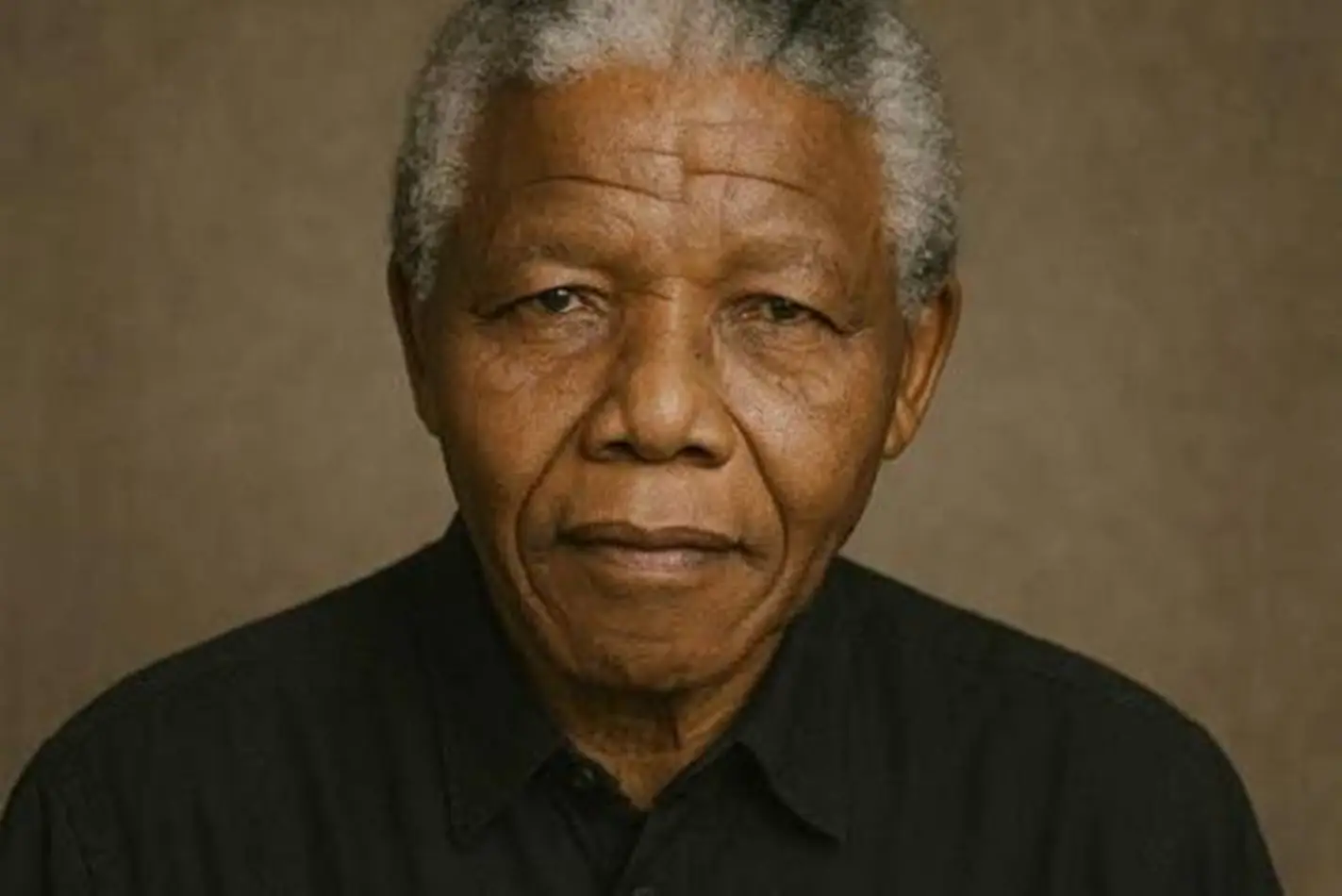
The Mandela effect coined by Fiona Broome in 2009 occurs when people share the same false memory about an event or detail. It takes its name from people who recalled Nelson Mandela dying in prison in the 1980s. Mandela was released in 1990 and died in 2013.
It happens because human memory is not always accurate and can be influenced by others.
Rather than pointing to parallel universes or timeline shifts, psychology and neuroscience explain the effect as a natural by product of how human memory works
How did so many people incorrectly remember Nelson Mandela’s Death?
The remembered version: Many people recall Nelson Mandela dying in prison during the 1980s, with some claiming to remember televised news reports, funeral coverage and speeches by his wife, Winnie Mandela. In reality, Mandela was released in 1990 and died on 5 December 2013.
What it has been attributed to: One explanation is confusion or limited knowledge of South African politics. Steve Biko, another prominent anti-apartheid activist, died in police custody in 1977. His story was depicted in the 1987 film Cry Freedom. Another suggested source of confusion is Egyptian President Anwar Sadat, who was assassinated in 1981. However, neither explanation has been demonstrated to account for the collective memory.
In 1985, Mandela’s daughter Zindzi publicly read a statement from her imprisoned father rejecting an offer of conditional release. Winnie Mandela was also campaigning for her husband’s freedom, creating another possible source of confused recollections.
Why this Mandela Effect is harder to dismiss as simple ignorance: Mandela was internationally famous throughout the 1980s. On 11 June 1988, a massive anti-apartheid concert was held at Wembley Stadium in London, with an estimated 600 million television viewers across 67 countries. The South African apartheid government banned the broadcast domestically.
Just 20 months later, on 11 February 1990, Mandela was released after 27 years in prison. He appeared at a second Wembley concert in April 1990, became South Africa’s first democratically elected president in 1994, and famously presented the Rugby World Cup trophy in 1995, helping symbolise national reconciliation.
These extensively documented events raise an interesting question: why do some individuals remember Mandela dying years before events that received enormous international attention?
What scientific research suggests: A 2022 University of Chicago study by Deepasri Prasad and Wilma Bainbridge investigated the Visual Mandela Effect. Researchers discovered that people consistently made the same specific mistakes when remembering familiar images and brand logos, even after exposure to the correct versions.
The researchers could not fully explain these shared errors through visual attention or ordinary perceptual differences. However, the study examined images rather than memories of Mandela’s death.
Why does the Mandela effect happen?
The strangest thing about the Mandela effect is that large groups of people remember something incorrectly in exactly the same way.
Human memory does not work like a recording. When you recall an experience, your brain reconstructs it using fragments of the original event, your existing knowledge and information you have encountered since. Psychologist Daniel Schacter describes misattribution, suggestibility and bias as common consequences of the way memory works. A detail can therefore feel completely authentic even if it was added later.
We fill in details that seem to belong
When part of an image is unclear or easily overlooked, the brain may supply a detail that fits its expectations. A wealthy-looking gentleman seems as though he should wear a monocle. A cartoon monkey seems as though it should have a tail. A mostly gold droid seems as though it should have two gold legs.
Psychologists call these expectations schemas. They may explain some famous examples, but they do not explain all of them. In the Fruit of the Loom experiment, for instance, participants repeatedly chose a cornucopia even though a plate would arguably be a more predictable object to place beneath fruit.
We can forget where a memory came from
Sometimes we remember a detail but lose track of its original source. Psychologists call this source monitoring. You might remember a quotation perfectly but forget whether you heard it in the original film, a parody, an advert or a friend’s retelling.
That could help explain why “Luke, I am your father” feels more familiar than Darth Vader’s real line. Repeated misquotations and altered images can become so familiar that we eventually mistake them for the originals.
Other people can influence our memories
False memories can also spread between people. In a 2001 experiment, volunteers viewed scenes such as kitchens containing a selection of household objects. They then recalled the objects with a partner who had been instructed to mention items that were not actually present.
When tested later, participants were more likely to “remember” seeing the objects their partner had suggested. The effect was particularly strong when the invented object fitted naturally into the scene. The experiment does not prove that the internet creates Mandela effects, but it demonstrates how one person’s memory error can become part of someone else’s recollection.
Why do people make the same mistake?
In 2022, University of Chicago researchers Deepasri Prasad and Wilma Bainbridge conducted one of the first experimental investigations of the visual Mandela effect. Their study focused on familiar characters and brand logos.
Participants at looking at certain images including Pikachu, Mr Monopoly and the Fruit of the Loom logo repeatedly converged on the same specific error, often with considerable confidence. The researchers found that differences in attention, familiarity and exposure could not provide one simple explanation for every example.
There is therefore no single proven cause of the Mandela effect. The most likely explanation is that several ordinary features of memory missed details, familiar associations, source confusion, repetition and social influence sometimes push many people towards the same convincing mistake.
For more on what happens between an original experience and the moment you recall it, see our guide to how memories are formed.
Famous Mandela effects that might fool you
Before revealing each answer, pause and picture it. The detail you feel most certain about might be the one that never existed.
Pikachu’s tail
Picture Pikachu’s lightning-bolt tail. Is the tip black?
If you said yes, your memory has added a detail that was never there. Pikachu’s tail has a brown base and a yellow tip the black belongs on his ears. Even more strangely, the black-tipped tail was one of the specific false memories repeatedly uncovered in research by University of Chicago psychologists Deepasri Prasad and Wilma Bainbridge.
Mr Monopoly’s monocle
Top hat, moustache, cane… and a monocle. That is Mr Monopoly, right?
Not quite. The familiar mascot does not wear a monocle. Yet when YouGov surveyed 1,000 U.S. adults in 2022, 58% said that he did, while only 18% chose the correct answer. Researchers at the University of Chicago also found that people repeatedly selected the same incorrect, monocled version of the character.
Fruit of the Loom’s cornucopia
Picture the label inside an old T-shirt. Can you see the fruit spilling from a horn-shaped basket?
That basket is a cornucopia and according to Fruit of the Loom, it has never appeared in the company’s logo. Nevertheless, 55% of respondents in YouGov’s 2022 poll said the logo contained one. Only 21% remembered it correctly. The imaginary cornucopia was also a recurring wrong choice in Prasad and Bainbridge’s visual-memory experiments.
The Berenstain Bears
Complete the title before reading any further: The Beren____ Bears._
Did you instinctively choose Berenstein? The real spelling is Berenstain—the same surname as the series’ creators, Stan and Jan Berenstain. Despite that, 61% of Americans surveyed by YouGov chose the incorrect spelling, while just 20% selected the real one. One tiny vowel is enough to transform a childhood title into something many people would swear they had seen.
Curious George’s tail
Picture Curious George swinging through the trees. Did your mind give him a long, curling tail?
George has no tail—and H. A. Rey was already drawing him that way when the character first appeared in Raffy and the Nine Monkeys. Yet 43% of respondents in YouGov’s poll said that George had one, compared with only 26% who correctly said that he did not. The phantom tail also appeared as a recurring error in the University of Chicago study.
C-3PO’s silver shin
Picture C-3PO walking through the desert: gold head, gold torso, gold arms and two gold legs… right?
Almost. In Star Wars: A New Hope, C-3PO has one silver shin. Anthony Daniels, the actor inside the costume, explained that the silver reflected the other gold leg and even the desert sand so convincingly that many people never noticed it. The all-gold version later became one of the seven shared visual-memory errors identified by Prasad and Bainbridge.
Darth Vader’s famous line
You can probably hear Darth Vader saying it now: “Luke, I am your father.”
Except he never says those words. The actual line in The Empire Strikes Back is: “No, I am your father.” In YouGov’s poll, 62% chose the famous misquotation, while only 17% remembered the real line. The incorrect version supplies the missing context, which may be exactly what makes it so difficult to forget.
Which example caught you out? Before you look up another one, make a note of the detail you remember and where you think you first saw or heard it.
References
- Prasad, D., & Bainbridge, W. A. (2022). The Visual Mandela Effect as Evidence for Shared and Specific False Memories Across People. Psychological Science, 33(12), 1971–1988. See also the University of Chicago’s illustrated account.
- Transparent Replications, Handley-Miner, I., & Metskas, A. (2024). Replication of the Visual Mandela Effect image-choice experiment. Clearer Thinking.
- Schacter, D. L. (1999). The seven sins of memory: Insights from psychology and cognitive neuroscience. American Psychologist, 54(3), 182–203.
- Johnson, M. K., Hashtroudi, S., & Lindsay, D. S. (1993). Source monitoring. Psychological Bulletin, 114(1), 3–28.
- Roediger, H. L., III, Meade, M. L., & Bergman, E. T. (2001). Social contagion of memory. Psychonomic Bulletin & Review, 8(2), 365–371.
- Anti-Apartheid Movement Archives. 1988 Wembley tribute and 1990 concert programme.
- Nelson Mandela Foundation. Timeline, Mandela’s release from prison and Sporting Codes.
- Broome, F. How the Mandela Effect Was Discovered.
- YouGov. 2022 US Mandela effect poll and 2025 UK Mandela effect poll.
- NASA. “Houston, We’ve Had a Problem”. Library of Congress. Interview with Apollo 13 director Ron Howard.
- Disney D23. The line from the animated Snow White. Brothers Grimm. Snowdrop and Other Tales.
- Smokey Bear. Smokey’s Story.
- Fruit of the Loom. Logo FAQ. The Berenstain Bears. History of the series. The Jewish Museum. Curious George educator guide.
- WIRED. Anthony Daniels on the C-3PO costumes. Lucasfilm. The Darth Vader reveal.
- Bollywood Hungama. Tinnu Anand on Shahenshah. NDTV. Bachchan’s line in the promotional sketch.